
Never a day alone
An AI companion for older people living at home. A warm, familiar presence in the room, every day of the year.
An AI companion for older people living at home. A warm, familiar presence in the room, every day of the year.
It is half past two on a Tuesday. The carer left at nine. The television has been on since then, though nobody has really watched it. There will be no other voice in the house until tomorrow morning. For hundreds of thousands of older people in Britain, that is not an unusual day. It is every day. Demal 365 puts someone in the room.
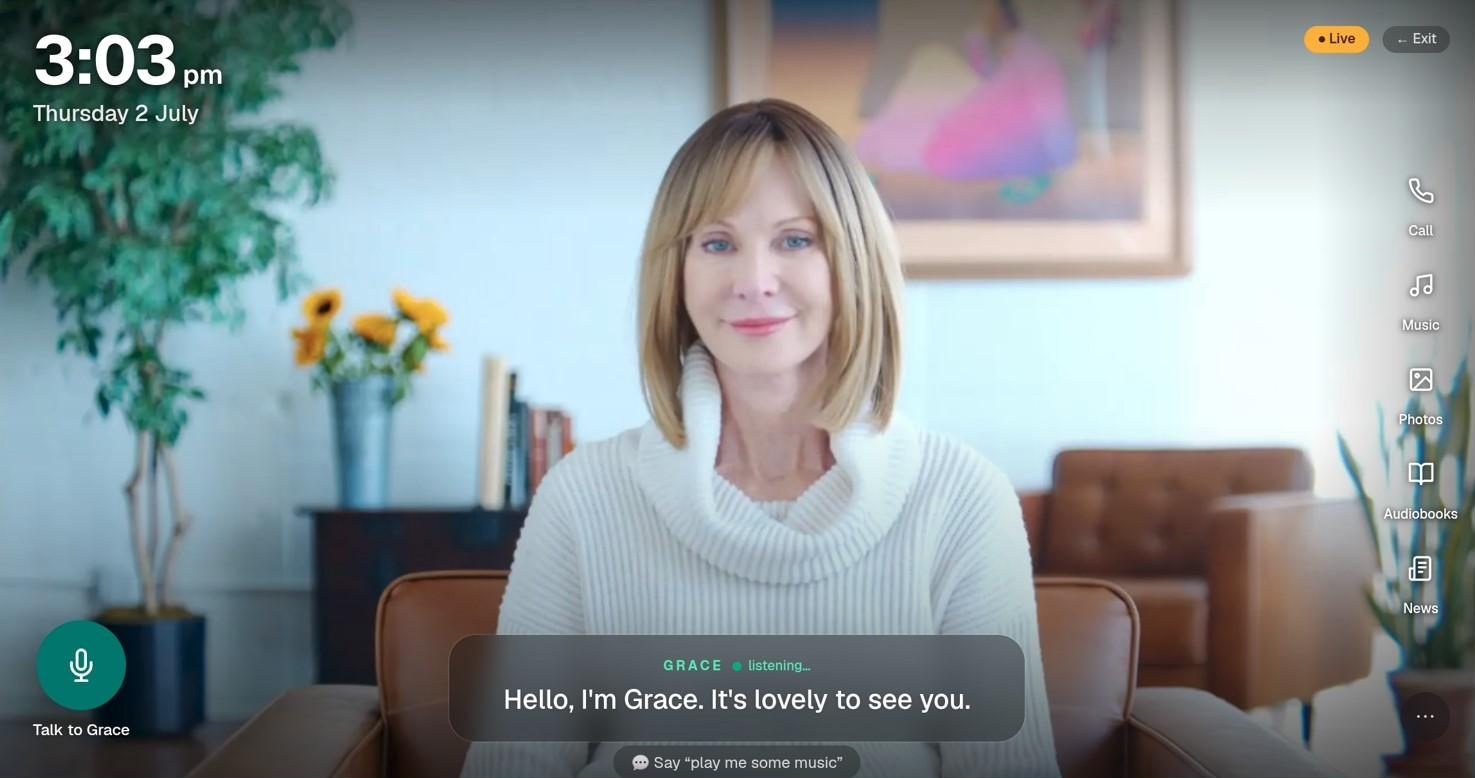
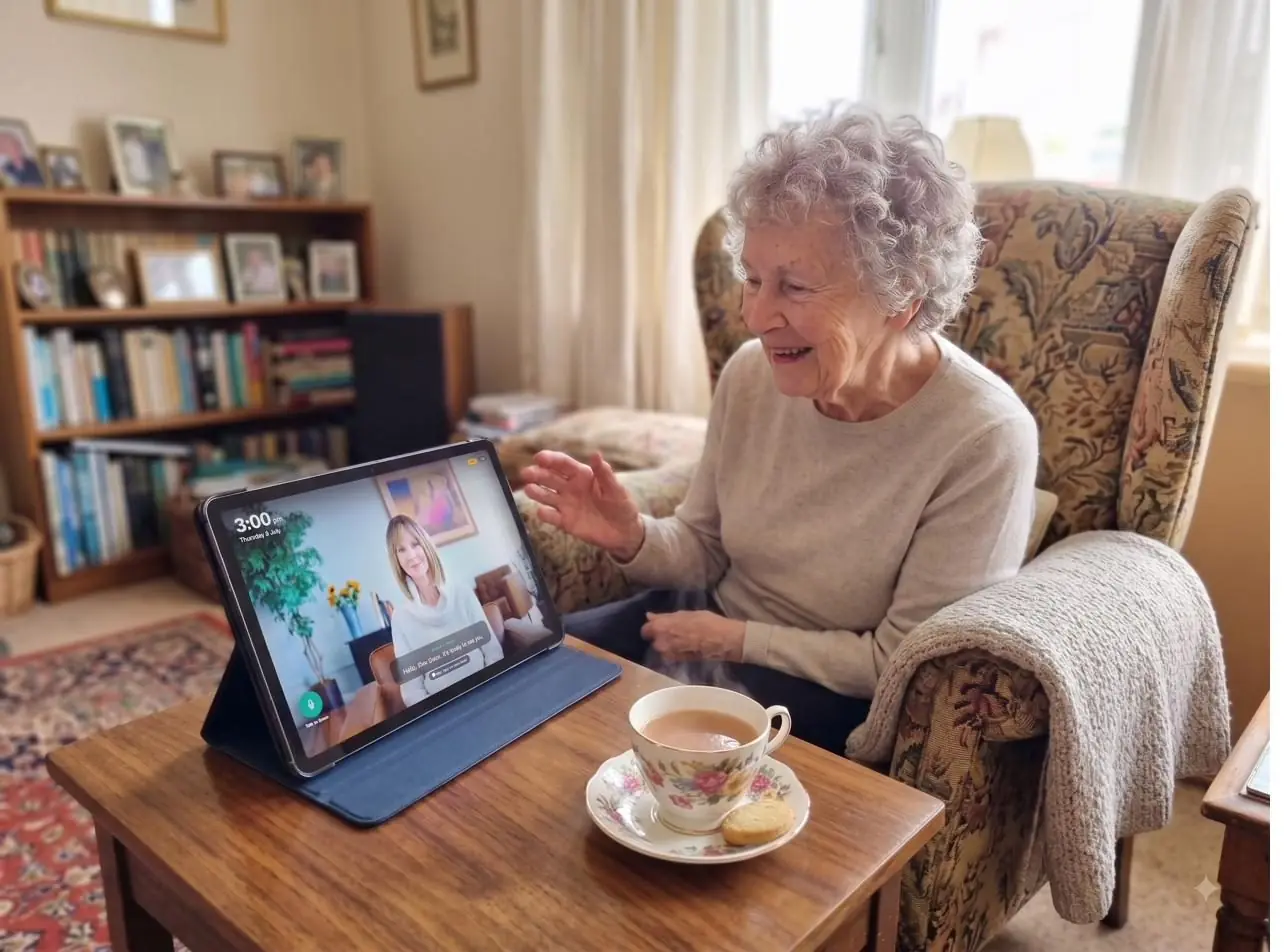
Demal 365 is a subscription companionship service, delivered on a simple tablet that sits on a side table in the person’s own home. The tablet is not the product. The product is Grace: a warm, photorealistic companion who appears on the screen, is present through the day, and is spoken to in ordinary conversation. There are no menus to learn, no passwords, and no apps. The person simply talks, and Grace talks back.
What makes her different is that she is personal to one individual. Before the service begins, the family completes a private profile describing the person’s life, their family, their interests, their routines, the music they love and the subjects to avoid. Grace draws on all of it, every day, in the same familiar voice. She is not a generic assistant with a face attached. She is a companion who knows this person’s life.
A private profile: their life, their people, their routines, the music they love and the subjects to avoid.
Switched on, and Grace is there. It runs on its own mobile connection, so there is no Wi-Fi to set up, no passwords and no apps.
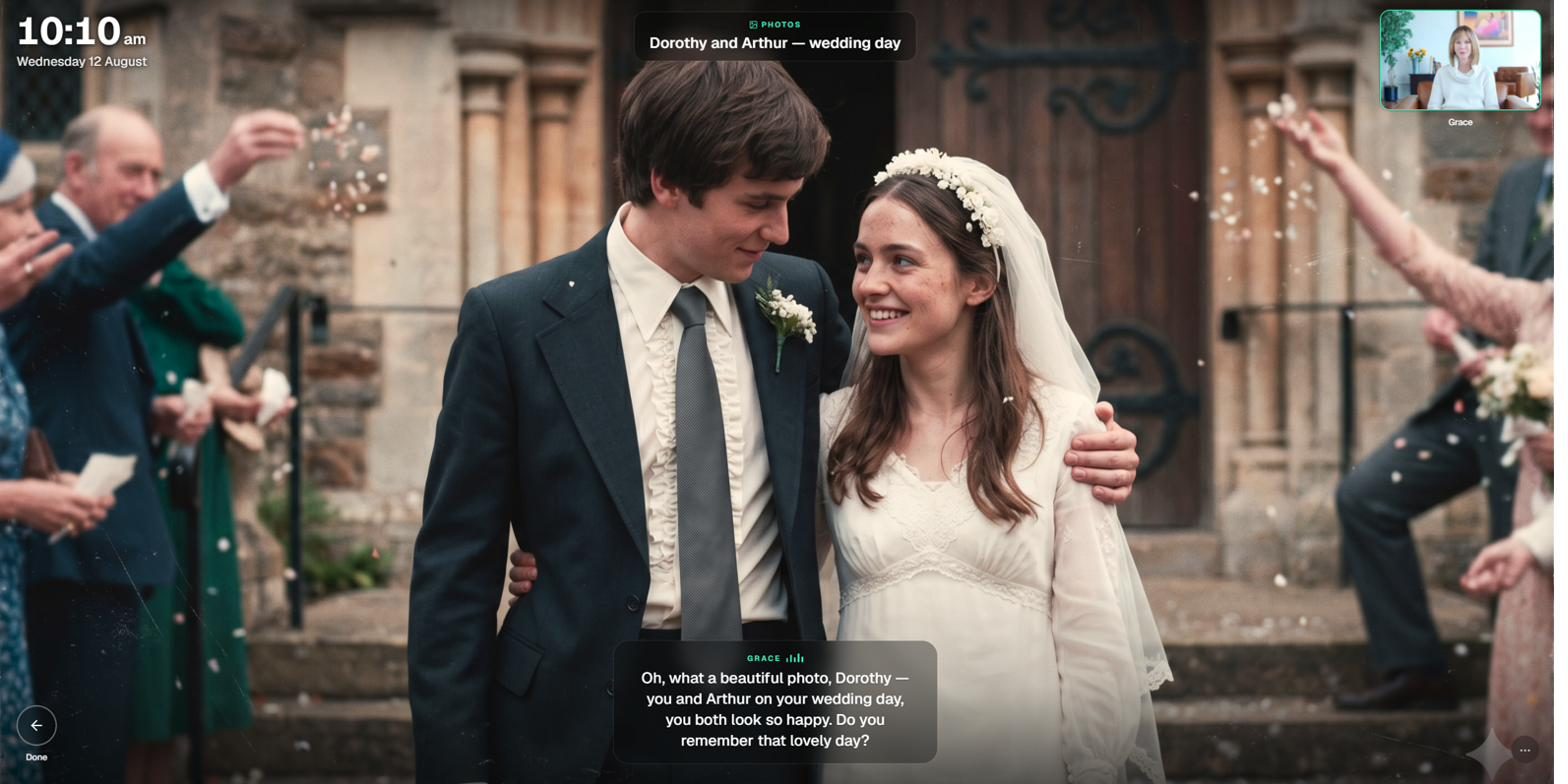
Video calls, voice messages Grace plays at the right moment, and new photographs, all from the family app.
Grace explains what she is, and what she is not, with real conversations with Dorothy, Jean and Bill.
A short film about Grace and the families she is built for: people living with dementia and older people living alone.
Demal 365 is for people living at home with early to mid-stage dementia, and for older people living alone for whom the days are long and quiet. Grace is the same warm presence for both, and the service is the same for everyone who uses it.
Sources: Alzheimer’s Society; ONS, Families and households in the UK 2025; Age UK, You are not alone in feeling lonely, 2024.
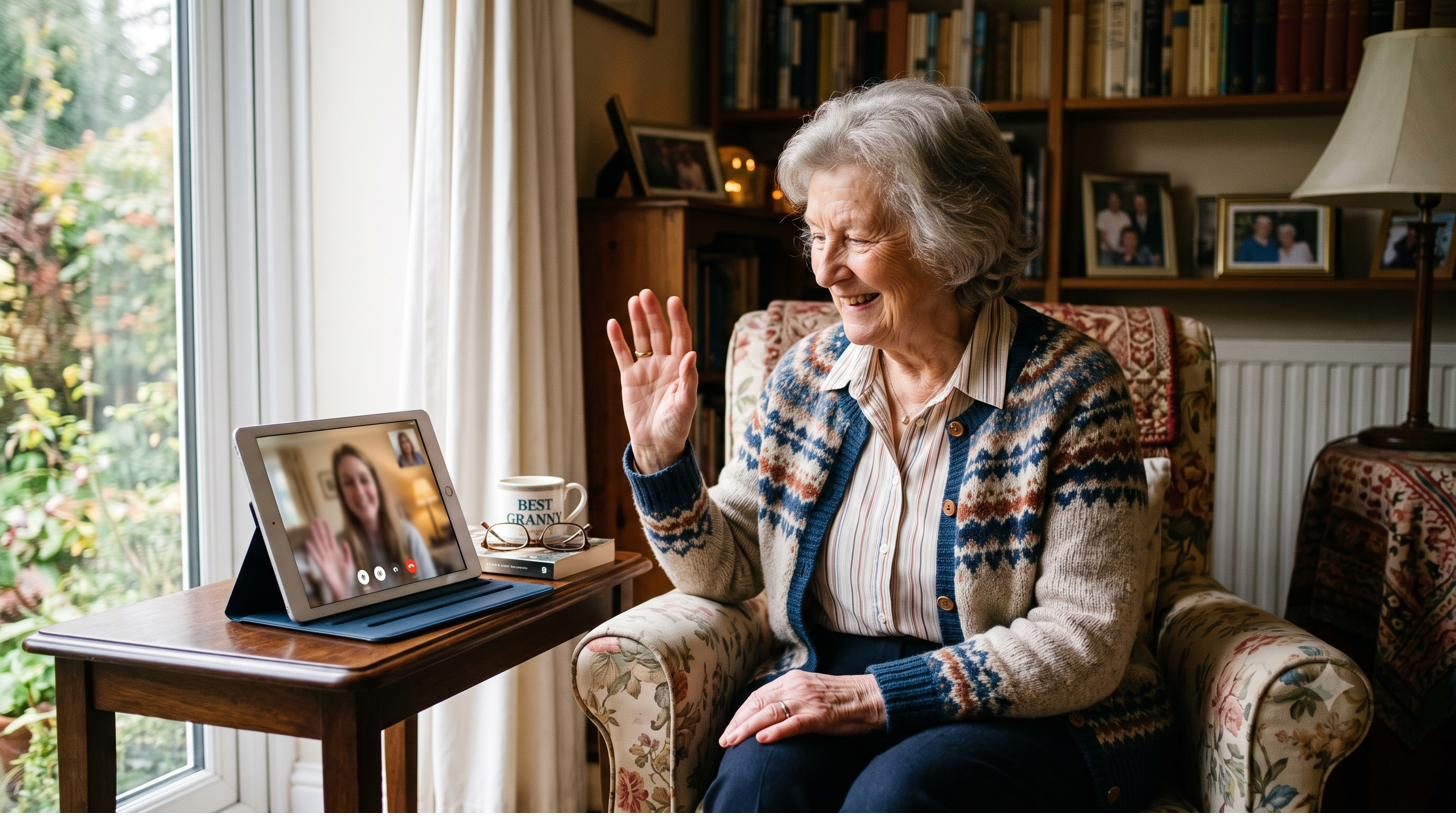
Families shape Grace’s world from their own phones, wherever they are. They see a simple record of time together and calls made: never what was said, and never an assessment.
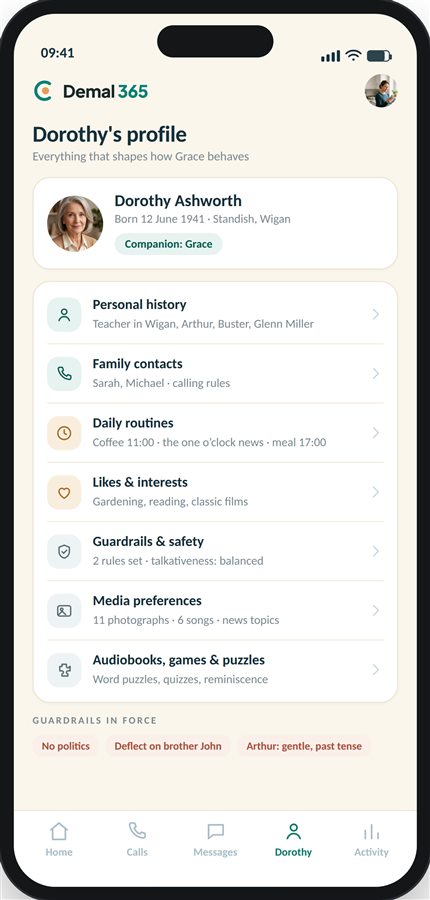
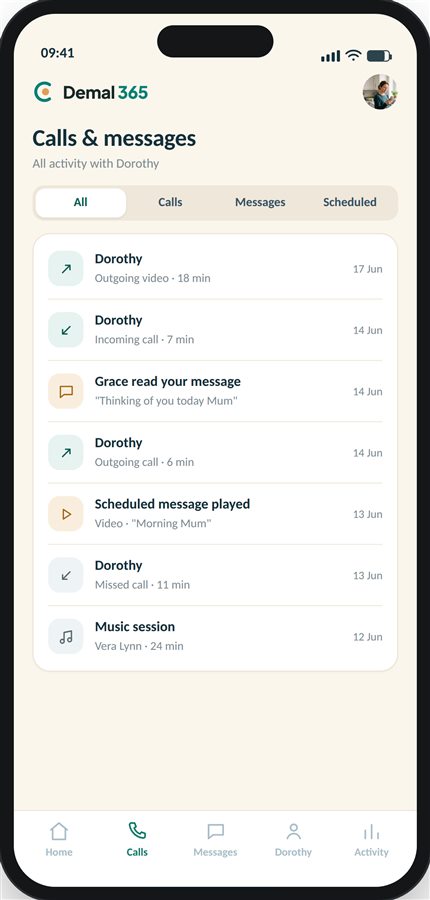
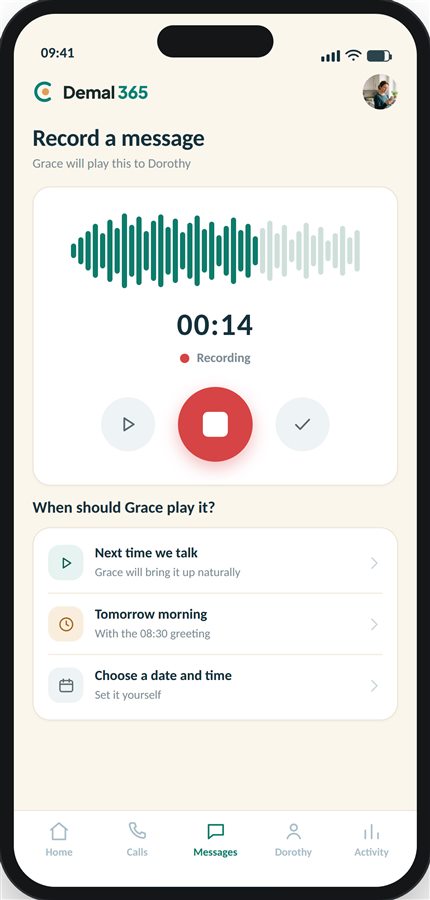
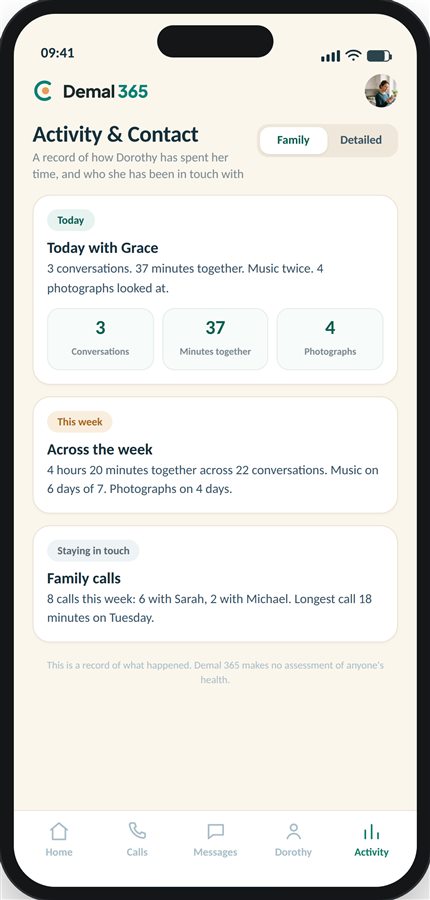
Design screens. The family app is in development.
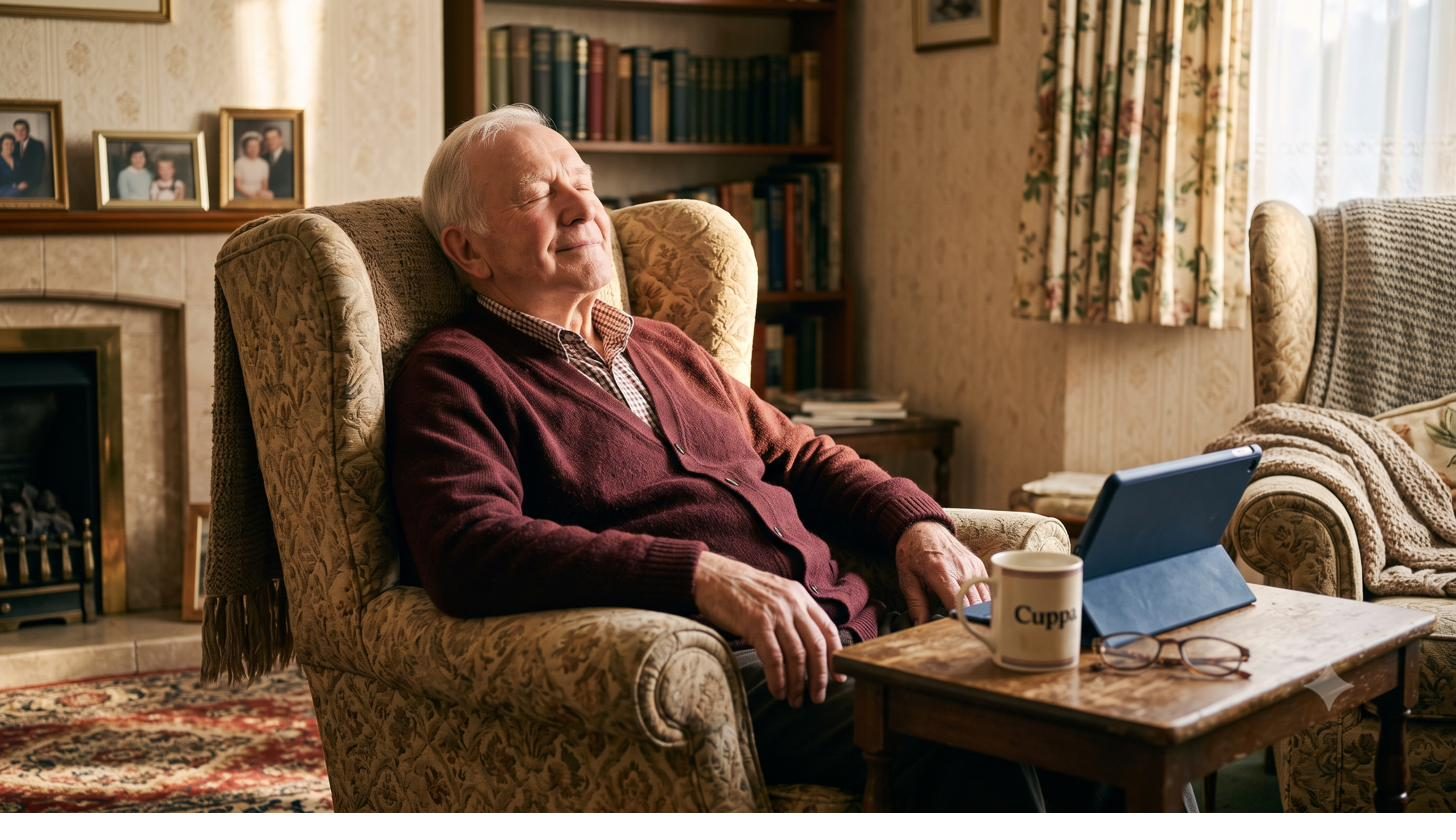
It removes every barrier. The technology that has reached this generation least is the technology that asks the most of them. Demal 365 asks nothing: the tablet is always on, Grace is already there, and the only skill required is the ability to talk to someone who is listening.
It gives families their relationship back. When the long silences are filled, the daily call stops being a welfare check and becomes a conversation again. Relatives shape Grace’s world from their own phones, wherever they are.
It preserves dignity. Nothing about Demal 365 tests, scores or corrects the person. There is no assessment and no sense of being monitored. There is only company.
I have spent more than thirty years in technology, and for most of that time the work was interesting rather than personal. That changed about three years ago, when my mother-in-law was diagnosed with vascular dementia. She lived in the United States, so we visited when we could, and in between we kept in touch by FaceTime. A daily call, a familiar face on a screen, and then the long quiet hours either side of it. Her family were with her as much as they were able, but they had jobs to go to. She passed away in late 2025 and is greatly missed.
My own mother was diagnosed with vascular dementia recently, and we are at the start of the same road.
What stayed with me both times was the loneliness in the gaps. Not the medical side, which others manage well, but the ordinary hours when nobody is there and the day loses its shape.
Grace came out of that. She is someone to talk to rather than something to operate: no menus, no apps, no passwords, just a voice. She knows the person she sits with, their history, their music, their family, the shape of their week, so the conversation is personal rather than filler. She brings the family into the room by video, plays the songs they grew up with, brings up the photographs, reads to them.
Until dementia arrives in your own family you do not see how far it reaches. People cut their hours or give up work altogether, and the ordinary rhythm of family life changes completely. Demal 365 is built for the person living with dementia, and just as much for the people who love them.
Paul Birchall
CEO, ai571 Labs Ltd
This boundary is deliberate and we state it plainly. Demal 365 is a companionship and wellbeing service. It is not a medical device, not a health-monitoring system, not a safety alarm and not an emergency lifeline. It is designed to sit in the home alongside the care that others provide, and we recommend it is used in addition to, never instead of, a conventional personal alarm or telecare service.
No. It is a companionship and wellbeing service. It does not diagnose, monitor or assess anyone, and it sits alongside the care that others provide.
No. The tablet is designed to arrive ready to use on its own mobile connection, with no settings, passwords or apps. The person simply talks.
Only the contacts the family approves in the family app.
No conversation is recorded or stored. The family app shows a simple record of time together and calls made, never what was said.
No. It is for people living with dementia and for any older person living alone who would welcome company through the day.
No. We recommend Demal 365 is used in addition to, never instead of, a personal alarm or telecare service and the care others provide.
Demal 365 is preparing for national launch. Register your interest and we will tell you when it is available, or get in touch to talk to us as an organisation.
A working proof of concept of Demal 365 has been built and demonstrated by ai571 Labs in the United Kingdom. The production service is designed to hold its data in the UK and to run from the outset as a managed fleet, supported at national scale.
We welcome conversations with content partners, charities and organisations working with older people. A fuller overview document is available on request.